Lumpy Skin Disease: Not Panic, Necessary Awareness
2026-06-18
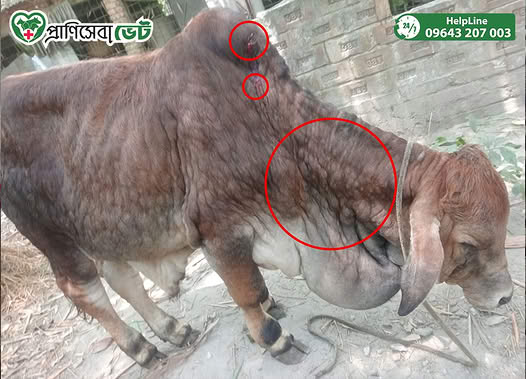
Lumpy skin disease is a viral infectious disease, mainly seen in cows and buffaloes. The disease was first detected in Zambia, Africa in 1929. Outbreaks were seen in Bangladesh in 2019 and later spread to different regions of the country. Recently, the disease has been visible again in some areas. So it is very important to take timely awareness, preventive measures, and advice from experienced veterinarians instead of panicking.
Common symptoms of the disease:
In the early stage, affected animals may have high fever, rising to 104-106 degrees Fahrenheit. At this time the animal may experience pain, weakness, and loss of appetite.
Round lumps, blisters, or firm swollen areas under the skin may appear in various parts of the body.
The animal's legs, neck, and lower body may swell. Often animals may limp or be unable to move normally.
In the later stages of the disease, some lumps or blisters may burst and create wounds. Blood or pus-like fluid may come from the wound site.
In some cases, wounds may spread to other parts of the body and cause rapid decline in the animal's physical condition.
Due to wounds in the mouth or food pipe, animals may show reluctance to drink water and eat food.
How the disease can spread:
The disease can spread quickly from one animal to another through bites of mosquitoes, flies, tsetse flies, ticks, and mites.
If affected animals are transported from one place to another, there is a risk of the disease spreading to new areas.
There is also a risk of spreading through saliva, milk, nasal and eye discharge, and direct contact with infected animals.
Healthy animals may also become infected through caregivers of affected animals, used equipment, unclean farm environments, and reuse of the same needle or equipment.
What we should do:
Lumpy Skin Disease is a serious disease that can cause major economic damage to dairy farms and fattening farms. So if affected animals are seen, they should be separated quickly and treated according to advice from experienced veterinarians.
It is important to control mosquitoes, flies, and tsetse flies on the farm, maintain cleanliness, avoid transporting affected animals, avoid reusing the same needle or medical equipment, and take necessary preventive measures to protect healthy animals.
This disease can reduce milk production, cause weight loss, and financially damage farms.
praniSheba Vet is with you:
praniSheba Vet — pranishebavet.com.bd provides quality and specialized animal health care through skilled and expert veterinarians. Farmers can get necessary advice and medical services from any part of the country at any time by mobile phone.
Through this service, farmers can quickly receive online consultation, medical advice, and prescriptions by email or message using a mobile phone.
Call for service: 01844522027
Visit: http://pranishebavet.com.bd/
Stay aware and keep your farm safe.